Loyalty Loyalty-Winning Sales Experience

When I lead sales training sessions, I often begin with a simple question:
“What’s the best and worst sales experience you’ve ever had?”

The bad ones are easy—most of us have a horror story or two. But the great ones? Those are harder to articulate. They’re usually grounded not in a one-off wow moment, but in a consistent, relationship-driven experience.

Today, I want to share one of those rare “great” ones.

Years ago, I purchased a water treatment system from Secondwind Water Systems. I chose them because they were a customer of mine and had excellent reviews. During the quoting and installation process, they were everything you hope for—consultative, educational, and professional.

Since then, their ongoing service has remained top-notch—prompt, proactive, friendly, and helpful. About a year and a half ago, I started noticing a sulfur odor in my water. I called in, and my sales rep personally guided me through how to shock the well and troubleshoot the issue. He also said, “If this doesn’t solve it, I’ll help you upgrade the system.” He followed up a few times after that to check in—no pressure, just care.

Fast forward to today: I decided it was time for the upgrade.

I sent an email. Within 20 minutes, the same rep was on the phone. He remembered me. Within an hour, he was at my house. He explained what was happening, walked me through the solution, provided a quote, explained next steps, and even scheduled a follow-up to ensure satisfaction.

That’s what earns repeat business. I’m not going to shop around.
That’s what earns trust.
That’s what earns referrals shouted from rooftops.

This is the kind of experience we should all strive to deliver—and it’s a reminder that great sales aren’t flashy. They’re grounded in reliability, responsiveness, and relationships.
This Is the Time for Partnership

There’s a lot of uncertainty in the market right now. Big headlines. Big layoffs. Big tariffs. Inflation is squeezing margins. Prices are rising. Forecasts are increasingly unpredictable.

In moments like these, it’s tempting to retreat—to double down on short-term cost control and prioritize immediate wins over long-term strategy. But if there’s one lesson we should carry forward from the challenges of COVID, it’s the importance of resilience.

And I’ve found that resilience isn’t just about weathering the storm—it’s about how well we work with others when the pressure is on. That’s why partnership matters more than ever.

Throughout my career, I’ve focused on catalyzing communication, trust, and forward-looking planning between end users, suppliers, distributors, and internal teams. That collaborative space—where challenges are addressed head-on instead of passed down the line—is where real, lasting value is built.

But here’s the thing: these relationships can’t just be reactive. True resilience is built before the storm hits.

Partnership and collaboration should be embedded in day-to-day business practices—not reserved for times of adversity. When trust, alignment, and open communication are part of your operating rhythm, adaptability becomes much easier when challenges arise.

One of the biggest shifts I’ve seen recently is around brand loyalty.  Early in my career, I questioned pricing strategies that leaned too heavily on customer dependency. I remember being told, “Once it’s specified, changing it takes an act of Congress.” And at the time, that was true—customers grumbled, but paid the increases. It felt arrogant.

But things changed.

During tariff hikes and post-COVID volatility, some suppliers introduced “temporary” surcharges that quietly became permanent. Some suppliers used the moment to boost margins –at the cost of trust. Even as raw material costs dropped, prices stayed high—then came the usual 3–4% annual increase layered on top. Customers felt it more than ever. 

Whether my role is with a distributor or manufacturer, I’ve always advocated for the customer—working both sides of the equation to plan ahead through forecasting, blanket orders, shared inventory, and transparency. The goal isn’t just to lower costs—it is to improve operations, support continuous improvement, increase resilience, build perspective, and build strong, supportive partnerships.

That work helped us mutually adapt to market volatility.

The biggest change I’ve seen over the past 22 years is customers themselves. Burned by shortages and price hikes, many are now far more open to change—even if it takes time.

Those alternative equipment samples I gave away years ago for testing? They’re now displacing legacy products at lower prices, with better features. Today, loyalty hinges on the value a supplier brings—and how they show up when it matters most.  Suppliers unwilling to collaborate, especially in adversity, are increasingly being replaced.

We can’t navigate this landscape alone.  We need to lean on each other—suppliers, customers, and cross-functional teams—to share insight, mitigate risk, and plan proactively.

The companies that thrive in uncertainty aren’t the ones that tighten their grip. They’re the ones that build trust—long before it’s tested. True partnership is a daily practice, not just a crisis response.

Let’s keep listening. Let’s keep aligning. Let’s build resilience—together.

This post was inspired by dialogue on Michael Worden’s recent post on the topic, join the discussion!

Think Like The DMV: Using Tagging as a Visual Indicator to Replace Expired or Missing Hoses

Applications in Consultative Sales

August 12, 2024

“We are bad at keeping track of equipment” and “Our equipment goes walking. It’s not always available where we need it, when we need it”. These are the most common things I hear when consulting with my customers on most of our products. These are also things we can help with.

Over the past year, I’ve had several of my Aflex hose customers come to me with serious challenges relating to hose management. In some cases, our discussion is proactive regarding process improvement, in others, it’s reactive to the findings of an agency inspection (such as the FDA). In both cases, it’s been a fantastic opportunity for me to do a deep dive with these customers and the product to understand exactly how we can provide value to overcome challenges like these.

Streamline Tags (also known as a clearmark) have become a low cost and simplistic component to support tracking and rotating equipment! A streamline tag is a label that is placed around the silicone cover of the hose and is then encapsulated by a transparent silicone that is formed into a thin streamlined cover. It can be colored and can have text.

Traditionally, customers use the streamline tag to highlight information such as the item’s makeup and its identification within a facility. Now, companies are adding color to it to give a visual indication of when it needs to be replaced, similar to the way the Department of Motor Vehicles (DMV) in many states uses colored tags to indicate expired registrations and safety inspections.

I now have customers implementing a 6-color rotation strategy. For example, hoses they want to be replaced in 2029 may have a red tag. While we are also working on additional hose management strategies to improve rotation on a schedule, any hoses with red tags remaining in 2030, will stand out to facility operators and engineers.

Customers are also adding tag lines or using colors to indicate departments clearly so that when a product “goes walking” and ends up in the wrong area, it can make its way home.

Example of a streamline tag used to provide a hose’s identification information (including location within a building). These tags can be customized to customer needs and can be colored.

Flying a Kite: Dad’s Lessons on Sales & Integrity

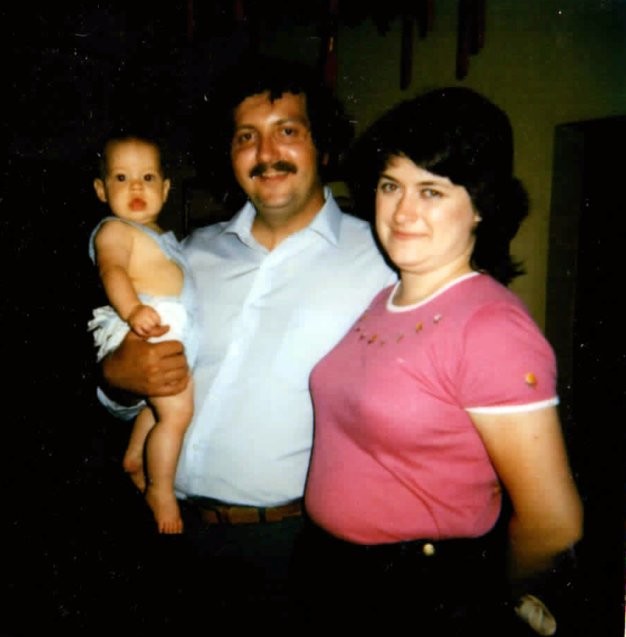
I did not understand what being “laid off” or “recession” meant but I knew we couldn’t go out to eat regularly and that we couldn’t go on vacation. However, at four years old, I mostly ate macaroni and cheese and was content with building a fort out of couch cushions and blankets. I knew that it meant my mother went to work and discovered coupons but also, it meant my dad could spend time with me. I didn’t understand why that didn’t make everyone happy because previously, he was always “on the road” doing his sales job.

I don’t remember exactly how much time our family remained in that state of uncertainty and fear, but I do remember the kite that we made and flew, the high school baseball games we watched, early morning fishing, walks around the neighborhood, tours of factories and the fish hatchery and trips to museums. I treasured.every.moment.

Over 20 years later, barely out of college, I found myself “on the road” doing my sales job, coming home late each night, but revived each morning and eager to succeed. Dad’s advice to me was to “just talk to people, have a conversation, be genuine and keep in touch”. He told me that people want to be heard and my job was to make sure I consult them on a solution that met their needs. He told me to build a relationship.

One of my first tasks was to introduce myself to my “accounts”–those who had contracts with my company that I was expected to renew.  When I introduced myself and listened, I was shocked. They all described how they had been neglected after signing and felt angry and deceived. When I talked to my boss about this, I expected to receive guidance on how the company would correct the experience. Instead, he told me to find new accounts. I was troubled but my coworkers assured me this was “normal”. I took my dad’s advice and built honest relationships with new accounts. It came naturally and I was successful, but the company culture was dead weight, hanging on me.

Five months in, the branch manager (the boss of my boss) called me in to discuss a call of praise he had received from a customer whom I had consulted and advised against spending $2,000 on a product that he asked about because it didn’t perform functions he assumed. He valued the honesty and education from me enough to call. Wrong move – according to the branch manager. I explained that from my conversation with the customer, I knew the business was expanding and that I’d laid the foundation to sell a $15,000 unit within 3 months to meet the new demand. I even had an appointment with him to visit the office to look at the equipment I suggested. Still, to the manager –wrong answer. He told me to tell customers what they wanted to hear in the moment (regardless of whether it was true) and invoice units. Lie and move on. I remember the look of disappointment on his face as I bravely fought back tears.

That evening, I vented to my father about my scolding and he told me about the time he was fired for the same thing (–the time that ultimately led to some of my best childhood memories). I was shocked. My dad, fired? It was hard to believe. His colleagues and clients alike always went out of their way to say hello and invite him (and sometimes me!) to their gatherings. He was valued and that always inspired me.  He told me to ask myself if I wanted to work for a place that didn’t value what I offered and caused me to place a value on my integrity. He told me that their expectations were not going to change and asked if I could be comfortable with that long-term? No and no. I left and have never looked back.  

I think about that time often. I am grateful for the guidance and example my father has provided, and I still appreciate his continued support and advice (and wish I took more of it in my earlier years – as I imagine all children who thought they knew better come to realize around this age). Understanding that experience makes me value childhood memories more. I am entirely proud to call him “Dad”.