Step outside the box and go for some laughs with your training!
Fun is Memorable
One challenge I faced as a manager is supporting onboarding and growth for people without technical experience in our industry. I was in their shoes years ago when I didn’t know what an o-ring was. My boss asked, “Do you have a blender?” A simple, instant connection.
I was lucky to have a team that helped me understand by relating things I knew to what I was learning. When I became responsible for training, I assumed I could teach the same way, but I learned that people have different backgrounds, skills, and learning styles. So, I started consulting people thoroughly. I then began tailoring my training to their needs, sometimes getting creative to get the message across.
For example, years ago, I was teaching how to estimate shipping weights using technical data. My initial explanation didn’t work, so I asked for feedback. One employee said she had trouble visualizing 2D drawings in 3D and understanding the product, since she couldn’t see it physically.
I decided to try something different. I used a stuffed Fraggle (I love Muppets), took photos of how to measure with a tape measure, and explained the process with humor. I even wrapped the Fraggle in bubble wrap to show packing considerations. The result was a fun and memorable tool that helped people understand the topic and eased their frustration.
This experience taught me the value of thinking outside the box and how a little creativity can make a lesson stick. Sometimes, I still use a Muppet, and it always works!
We’ve all been there. You understand your customer’s needs, you believe the deadline is critical, and you’ve worked hard to ensure everything is perfect. Then, something goes terribly wrong. You dread telling the customer, as you fear their reaction could be harsh. Suddenly, you find yourself recalling phrases like “Don’t shoot the messenger” and “Nobody likes to bear bad news,” from your high school readings of Sophocles or Shakespeare.
Delivering negative news can be difficult and awkward, but it’s important to recognize that clear communication is often critical and necessary.
Here are some tips to help you handle these situations effectively:
Stay calm and approach with support: The key is to assure your customer that you understand their needs and are doing everything possible to meet them.
Communicate promptly: In many situations, delivering bad news is better than no news at all. Customers appreciate being informed early, allowing them to adjust plans rather than scrambling at the last minute.
Don’t assume your news will be perceived as negative: Customers sometimes overestimate lead times or may be waiting on other components. Before apologizing, assess their reaction. Ask if the update still works for their needs.
Be the problem-solver: Reassure your customers that you’re working on their behalf. Explain any measures you’ve taken (or will take) to improve the situation. Can it be sourced from stock? Is there a suitable alternative? Can expedited shipping help?
Highlight your efforts: Share all the steps you’ve taken to resolve the issue. This will reinforce your dedication and help maintain the customer’s confidence, deterring them from looking elsewhere.
Listen actively: Customers are human too, and they may be under pressure. If they express frustration, listen quietly and let them vent. They’re likely upset with the situation, not with you personally.
Acknowledge the situation: Validating their concerns can diffuse tension. If the issue isn’t your fault, you can still acknowledge the situation without taking blame. If it is your fault, take responsibility and emphasize your commitment to supporting them.
Ask how you can help: Sometimes, after exploring all options, nothing may seem ideal. Asking your customer for suggestions can offer new ideas and may also help them come to terms with the situation.
Think ahead: Look for ways to prevent this from happening again. Should stock levels be adjusted? Is training needed? Can you build stronger relationships with your suppliers or consider alternatives?
Follow up: After the situation is resolved, determine the next steps. Should you make a follow-up call, send a thank-you note, or offer a future discount?
By applying these strategies, you’ll strengthen your relationships with customers and become their go-to problem-solver. In the end, you’ll prove that we’re all in the superhero business!
I want to share some of my takeaways from Masters of Loyalty by Duane Sparks (sequel to Action Selling). The best start I could think of was to introduce you to Mary-Ellen Berg. For the past 5 years, she’s been one of a few people in my personal life who calls me on the phone with regularity. She asks what is new in my life, what projects we’ve worked on around the house and how my parents are doing. We share a love of family, Disney and our dogs. I cried when she lost her dog and she’s supported me on Facebook as mine continues to decline. I consider her a friend and I tell people about her all the time. Mary-Ellen Berg is my realtor, a real-life Master of Loyalty.
She delivered a beyond-exceptional experience to friends of mine and then to me upon their referral. She sold my first house at asking price, in 3 months, during the recession. She’s knows what she’s doing, she’s good. She’s also dedicated – she stayed with us on our 9 months home search through 45 on-site visits during snowstorms, mud season and one hot, humid summer before we found the home that met our somewhat unique needs. With that time investment, I would not have faulted her for ending the relationship or minimizing time with us. Instead, she continued to make us feel like we were her only client. She consulted us, counseled us out of negative situations and ensured we were in the best position with the best resources through the sale. She maintains this status by keeping our relationship warm and staying aware of any shifts in our needs. In addition to the phone calls, she also sends monthly snail-mail letters and for her more local clients, sometimes leaves little gifts like a plant on their doorsteps.
Mary-Ellen Berg is an excellent introduction to Masters of Loyalty because she exemplifies a lesson that Sparks highlights – if you differentiate yourself once, you make a sale, but if you consistently differentiate the relationship, you can create a loyal customer. A loyal customer is someone who isn’t simply satisfied, it is someone who has stopped shopping and cannot be tempted away. Loyal customers aren’t responding to fancy marketing or flash sales, they respond to the relationship a representative built with them that they consider too valuable to give up.
Sparks cites the following figures:
75% of customers leave a supplier due to lack of a relationship (20% will provide this reason)
10% of customers leave because their needs have changed (Salespeople think 1/3 leave for this)
25% of customer say they left for a better price (Salespeople believe this is 50% of the reason)
75% of customers who left say they were satisfied or very satisfied when they left.
These stats highlights a gap: on average, representatives don’t engage with their customers enough. At the same time – they demonstrate an opportunity. Action Selling teaches us how to best engage customers, but learning to be a Master of Loyalty causes us to take that practice a step further. After we did the work to develop a relationship and close a sale, we can differentiate ourselves by planning to continue engaging these customers by reaching out to them long-term with sincerity. A commitment objective can be as simple as gaining agreement from the customer that he or she is more than just satisfied with the experience we are providing.
How many people in your personal life or professional career have made you beyond satisfied and achieved loyalty? There is one in mine. One. There is room for you to stand out in your world.
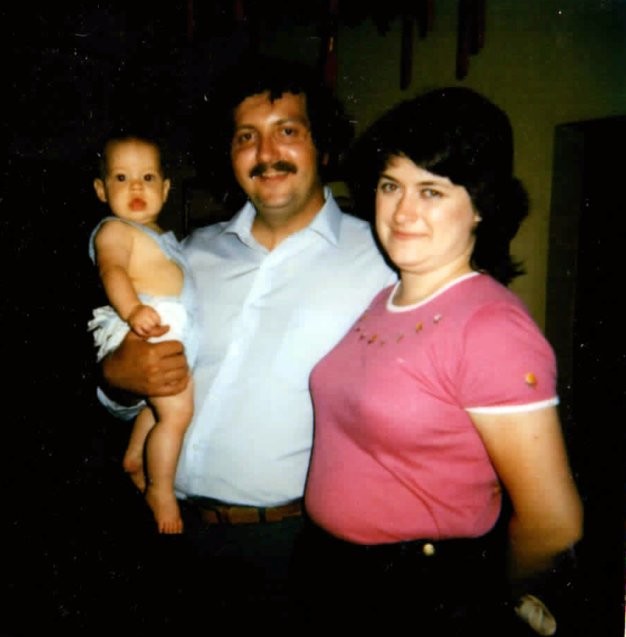
I did not understand what being “laid off” or “recession” meant but I knew we couldn’t go out to eat regularly and that we couldn’t go on vacation. However, at four years old, I mostly ate macaroni and cheese and was content with building a fort out of couch cushions and blankets. I knew that it meant my mother went to work and discovered coupons but also, it meant my dad could spend time with me. I didn’t understand why that didn’t make everyone happy because previously, he was always “on the road” doing his sales job.
I don’t remember exactly how much time our family remained in that state of uncertainty and fear, but I do remember the kite that we made and flew, the high school baseball games we watched, early morning fishing, walks around the neighborhood, tours of factories and the fish hatchery and trips to museums. I treasured.every.moment.
Over 20 years later, barely out of college, I found myself “on the road” doing my sales job, coming home late each night, but revived each morning and eager to succeed. Dad’s advice to me was to “just talk to people, have a conversation, be genuine and keep in touch”. He told me that people want to be heard and my job was to make sure I consult them on a solution that met their needs. He told me to build a relationship.
One of my first tasks was to introduce myself to my “accounts”–those who had contracts with my company that I was expected to renew. When I introduced myself and listened, I was shocked. They all described how they had been neglected after signing and felt angry and deceived. When I talked to my boss about this, I expected to receive guidance on how the company would correct the experience. Instead, he told me to find new accounts. I was troubled but my coworkers assured me this was “normal”. I took my dad’s advice and built honest relationships with new accounts. It came naturally and I was successful, but the company culture was dead weight, hanging on me.
Five months in, the branch manager (the boss of my boss) called me in to discuss a call of praise he had received from a customer whom I had consulted and advised against spending $2,000 on a product that he asked about because it didn’t perform functions he assumed. He valued the honesty and education from me enough to call. Wrong move – according to the branch manager. I explained that from my conversation with the customer, I knew the business was expanding and that I’d laid the foundation to sell a $15,000 unit within 3 months to meet the new demand. I even had an appointment with him to visit the office to look at the equipment I suggested. Still, to the manager –wrong answer. He told me to tell customers what they wanted to hear in the moment (regardless of whether it was true) and invoice units. Lie and move on. I remember the look of disappointment on his face as I bravely fought back tears.
That evening, I vented to my father about my scolding and he told me about the time he was fired for the same thing (–the time that ultimately led to some of my best childhood memories). I was shocked. My dad, fired? It was hard to believe. His colleagues and clients alike always went out of their way to say hello and invite him (and sometimes me!) to their gatherings. He was valued and that always inspired me. He told me to ask myself if I wanted to work for a place that didn’t value what I offered and caused me to place a value on my integrity. He told me that their expectations were not going to change and asked if I could be comfortable with that long-term? No and no. I left and have never looked back.
I think about that time often. I am grateful for the guidance and example my father has provided, and I still appreciate his continued support and advice (and wish I took more of it in my earlier years – as I imagine all children who thought they knew better come to realize around this age). Understanding that experience makes me value childhood memories more. I am entirely proud to call him “Dad”.




 Britni Fortin